The onslaught of AI, IoT, and general automation is being seen all over the industry. Businesses all across India have been eliminating positions in favor of newer and improved technologies, farming being no different.
Fueled by highly competitive markets, where it gets difficult to make a dime without losing some in the process, and the growing technological literacy between farmers, we now see first-world technologies at play in rural India.
AI and IoT: A Powerful Duo for Smart Farming
Automating Farming Activities
Ever since the great industrialization of the 1800s, automation has advanced to handle complex tasks and increase production.
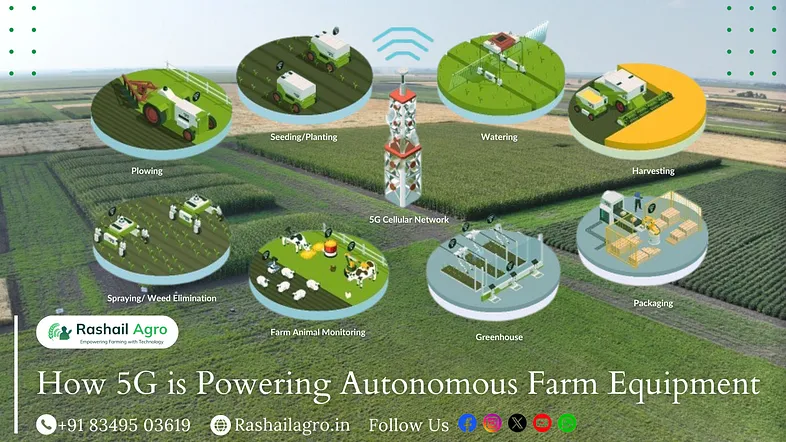
Farmer-controlled autonomous tractors are already being used by large-scale farmers in India. In addition to reducing labor costs, these tractors also increase crop production and farm optimally.
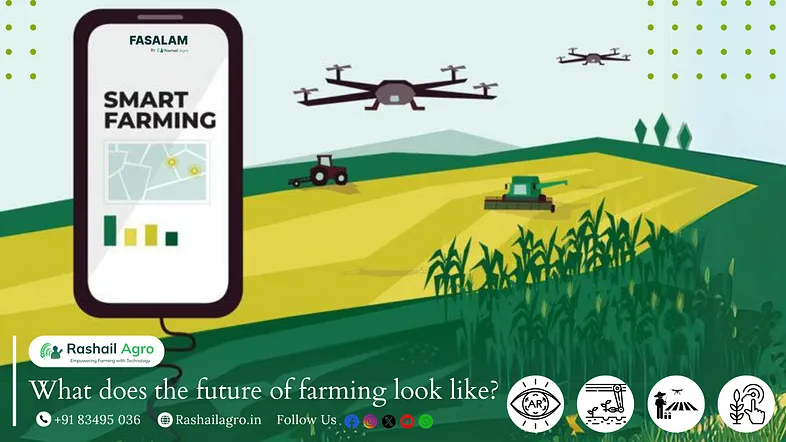
Today, farmers are also able to remotely monitor their crops and capture pictures with autonomous drones. Pesticides and fertilizers can be applied via air using UAVs. Drones equipped with AI can be used to keep an eye on livestock.
Predicting Weather Patterns
Technology today, is unbelievably precise. Introducing Micro-climatic weather forecasting, something unheard of in the last decade. A farmer can now view data on possible weather patterns pertaining to his/her farmland. Isn’t that incredible? Like, a personal weather forecast that is just for you and for your benefit.
Optimizing Resources
Artificial intelligence (AI), cloud machine learning, satellite imagery, and IoT products are examples of advanced technologies that are making smart farming a reality. As a result, farmers can now enhance their efficiency and better control the price of their produce.
From Smart Farming to Unmanned Farms
The destiny of the agricultural sector is AI, IoT, and unmanned farming.
Indian agriculture industry stands to gain enormously from modern technology, but that being said, AI is not without its challenges.
A lack of diverse datasets, a high learning curve, additional problems pertaining to safety, privacy as well as a shortage of freely available public information hinders progress.