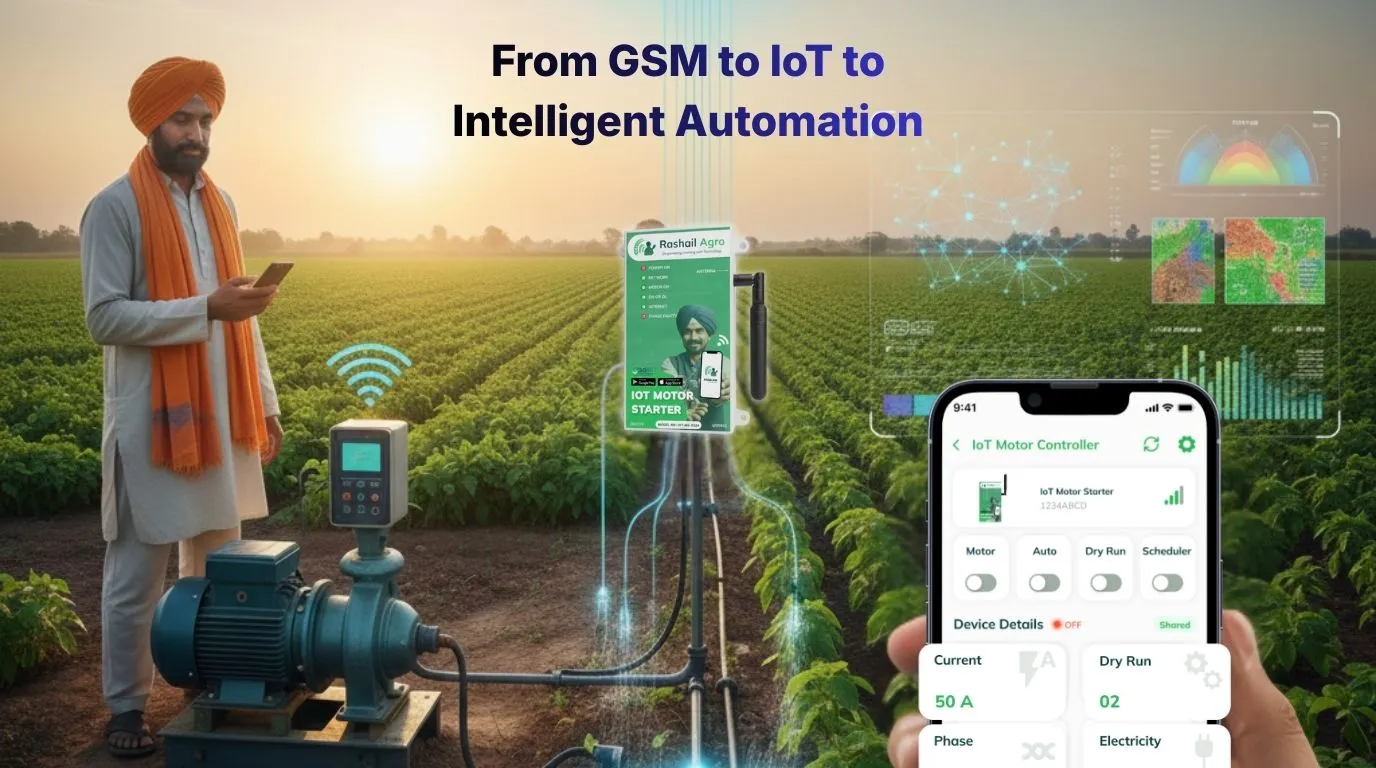
Smart agriculture, known as ag-tech — uses IoT technology to link everything from irrigation systems to soil and animal production.
As 5G rolls out worldwide, this high-bandwidth cellular technology is positioned just right, that it will make a lasting impact on agro-technology.
5G Enabled Smart Farming
Think of 5G as a high-speed highway for data, that can handle a massive flow of data at once, i.e. machines can work in tandem and communicate in real-time.
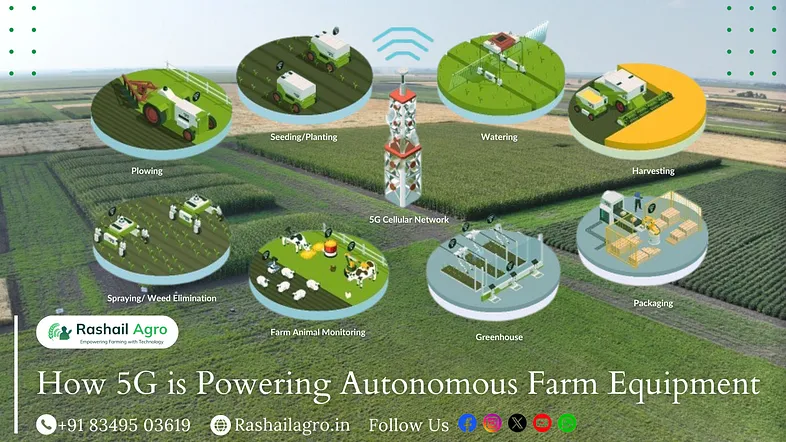
This opens up incredible possibilities, imagine a dozen agrobots working in close coordination, plucking ripe fruits, and organizing them into neat piles while another, much bulkier bot comes up to collect and ferry it onwards to another part of the farm, where more such robots meet carrying their produce.
This clockwork of interconnected vehicles is nearly art or something of that sort, artificial nature can be beautiful too.
How 5G Enhances Autonomous Farm Equipment
Real-Time Data Transmission
With 5G data transfers are done instantly. This means your sensors, machines, and control systems can be ultra-precise, computing gigabytes worth of data every milli second and conveying it across the network.
Information such as soil moisture levels, temperature variations, crop health metrics, and machinery status updates can be instantly shared and acted upon.
Improved Machine Coordination
Autonomous farming vehicles can be fitted with 5G-enabled devices, which allow them to ‘sync’ with one another. This brings a certain uniformity to tasks such as planting, watering, data collection, harvesting, and more.
Enhanced Remote Control and Monitoring
Farmers can monitor the status remotely from a place of convenience for video feeds and live data.
Autonomous farming equipment allows human operators to remotely adjust the vehicles’ speed, the distance between the rows, seed depth, etc., making the operations more flexible and efficient while saving on labor expenditures.
So, what comes next?
5G is, in all its glory, the backbone of future farming. Powering autonomous farm equipment, keeping things in check, and being exceptionally reliable at its job.
By 2050, Nearly 10 billion people will need access to healthy and nutritious food. This would require our food processes to change drastically if we are to not overwhelm the planet with environmental damage and climate change.
The future of smart farming is inevitably linked to 5G technology, promising increased efficiency, sustainability, and profitability for growers.